
Ecosystem Restoration in Legacy Mining Operations
Delivering scalable environmental outcomes aligned with regulatory, operational, and economic priorities.
EXECUTIVE SUMMARY
A South Asian mining operator faced landscape-scale contamination (chromium: 6,572 mg/kg; nickel: 8,042 mg/kg) threatening permit renewals and $50–100M in remediation costs. Reoflux designed and implemented an evidence-based, nature-based restoration strategy that achieved 99.5% water metal removal, 60–70% soil contamination reduction, and 40–50% cost savings while rebuilding regulatory trust and community support.
Our Strategic Approach
Evidence-based ecological restoration maximizing impact while minimizing costs
The Challenge
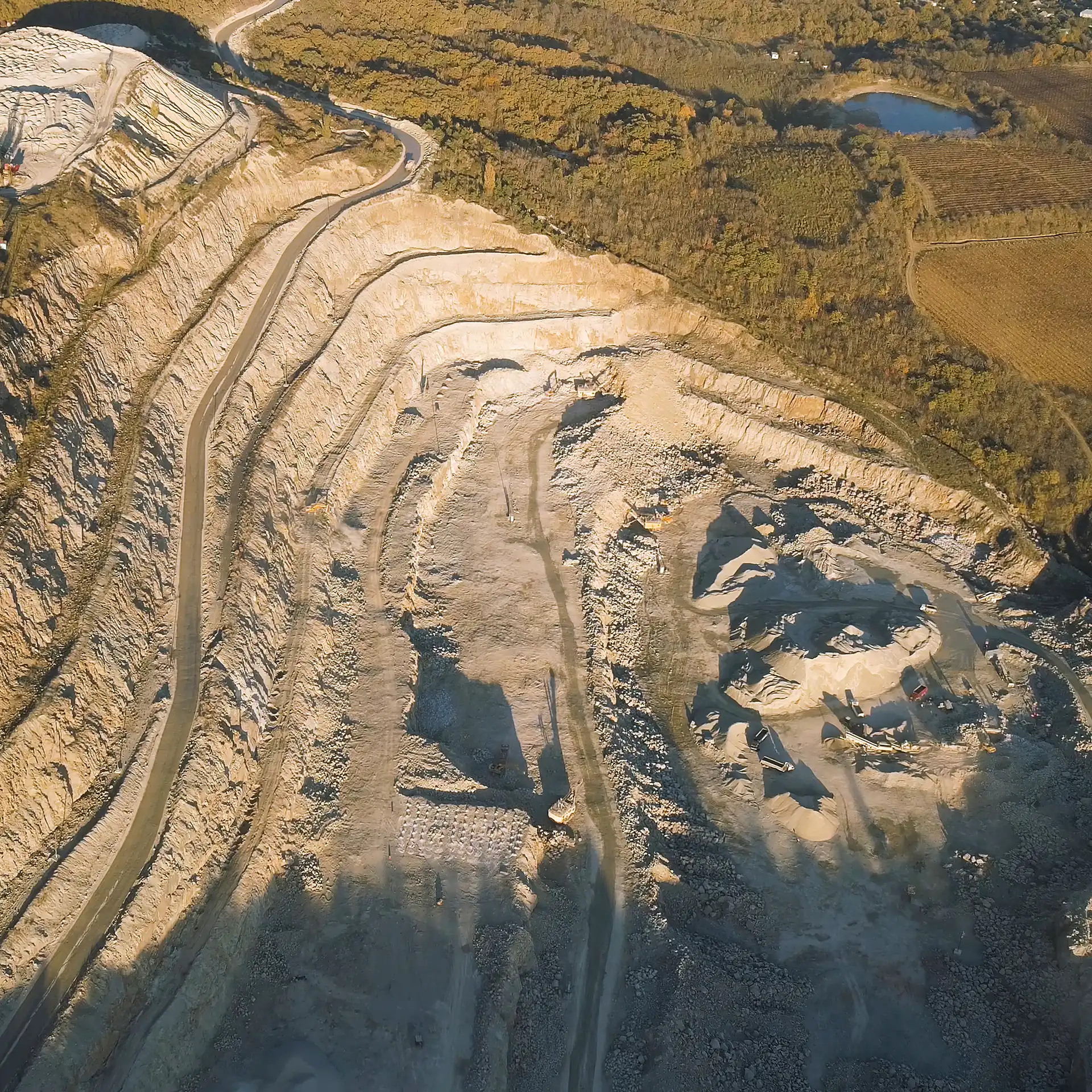
The operator inherited 2,000+ hectares of heavy-metal contamination exceeding safety benchmarks by 10–15×. Conventional approaches—chemical treatment ($2,000–5,000/hectare/year), excavation (operationally disruptive), or passive monitoring (regulatory unacceptable)—were unsustainable.
Our Proposition
A phased, evidence-led restoration model that converts environmental liabilities into durable regulatory, cost, and reputational advantage.
We conducted rigorous site-level ecological assessments to identify 23 native plant taxa with proven bioaccumulation capacity and natural adaptation to local conditions. This precision-led selection minimized execution risk, accelerated remediation timelines, and outperformed generic remediation approaches.
A coordinated, three-part remediation strategy delivered rapid impact across water, soil, and cost dimensions.
Water Treatment
Biological filtration using water hyacinth achieved 99.5% heavy metal removal within 15 days, restoring compliance at critical discharge points.
Soil Restoration
High-uptake native grasses and legumes reduced soil contamination by 60 to 70 percent within six months, stabilizing affected zones.
Circular Economy Integration
Harvested biomass was processed for composting and metal recovery, offsetting 10 to 25 percent of remediation costswhile eliminating secondary waste streams.
Quarterly monitoring cycles informed continuous optimization across species mix, harvesting cadence, and spatial prioritization. Transparent progress reporting supported regulatory approvals, rebuilt community confidence, and established a scalable framework for expansion across additional sites.
Measured Outcomes Delivered
Quantified environmental, financial, and regulatory impact achieved through evidence-based restoration
Environmental Performance
Cost & Regulatory Impact
Scalable Value Creation
KEY INSIGHTS
Turning environmental complexity into strategic advantage
Reoflux applies structured, evidence-led thinking to convert environmental and regulatory challenges into durable business outcomes. Our insights reflect what differentiates high-performing operators: disciplined use of local data, integrated solution design, and a forward-looking interpretation of compliance expectations.
Local Data Wins
Site-specific ecological baselines enabled materially better outcomes than generic remediation. Native species already adapted to local conditions reduced intervention intensity and ongoing management effort by 40–50%, accelerating results while lowering total cost.
Integration Outperforms
Nature-based restoration addressed multiple objectives simultaneously. Plant-led systems removed contaminants, restored ecosystems, strengthened social license, and enabled circular value recovery—delivering impact beyond compliance at lower marginal cost.
Compliance Is the Floor
Regulatory expectations now extend beyond contamination reduction to ecosystem recovery and community benefit. Operators that position remediation as land restoration secure faster approvals, more durable permits, and long-term stakeholder alignment.
Reoflux transformed the operator’s contamination crisis into a competitive advantage through evidence-based ecological restoration. In extractive industries, ecological-based restoration grounded in rigorous science and adaptive management converts contamination liabilities into operational licenses and stronger stakeholder relationships.